
Part 1 — The real supply chain: from London theft to Bucharest shop
Before we talk about detection, Apple, and laws, see the exact path a "cheap" part takes to your iPhone. This is not a conspiracy — it is an industrialised process documented by journalists, police and Apple investigations.
Theft — London, Paris, New York, Bucharest
Street snatch, car break-ins, hotel and shop robberies. Major Western cities are the main source. Met Police London statistics: 70,000+ iPhones stolen yearly in London alone. In Bucharest: ~3,000-5,000 cases reported annually per IGPR (Romanian Police).
Local collection — fences and "second-hand phones"
Thieves sell the phone (even if locked) to organised fences. Typical price: 100-300 RON for locked high-end iPhones, 800-2,500 RON for unlocked ones. The fence pays cash and asks no questions.
Transport to Shenzhen, China — Feiyang Times Building
The world's main dismantling hub is in Shenzhen, in the Feiyang Times building. Investigations by Times UK and BBC documented the chain: London → Hong Kong → Shenzhen. Victims' Find My pings confirmed the exact position on the 4th floor of the building.
Professional dismantling — every component has a price
Specialised teams break the phone into 12-18 parts: OLED display, battery, camera, USB-C port, Taptic Engine, microphones, antennas, pre-assembled brackets. iPhone 17 Pro display = ~250 USD on the Shenzhen parts market. A "locked" phone generates 30% of the value of a working one — without the Find My risk.
Global distribution — Aliexpress, eBay, "good price" sellers
Parts hit Aliexpress, eBay, Telegram, "grey" European distributors. They are sold as "OEM", "refurbished", "pulled" — all euphemisms for "harvested from another device". Prices are 50-70% below genuine new. Shady shops buy cheap and charge premium.
Service in Europe — the part reaches the Romanian customer
A shady independent shop receives the part at very low prices, without proper invoice or with fake documentation. They install it on your device, charge you the price of a "genuine" display, and walk away. The risk stays 100% with you.
Part 2 — Put yourself in the victim's shoes for a moment
Here let's set aside Apple, criminal codes, Activation Lock for a moment. Here we talk human to human, about what this market really means.
Imagine for a moment: it's a Friday night. You leave a restaurant with friends. Someone bumps into you, pushes you, or simply snatches the phone from your hand and runs. It takes 30 seconds. That's all.
In those 30 seconds, you lost:
- 700-1,500 euros — the money you worked for to buy it. For many people, that's an entire monthly salary or two.
- All photos and videos with your children, parents, holidays, moments that don't come back. If you didn't have active iCloud backup — they're gone forever.
- Access to banking accounts, saved passwords, work apps, important documents. You spend the next 48 hours changing passwords and cancelling cards.
- Your sense of safety — the city you live in changes overnight. You no longer pull out your phone on the street without looking around.
Now imagine that, 6 weeks later, your phone's display is being dismantled in a building in Shenzhen and sold online for $250. And another month after that, someone in a small shop in Bucharest installs it on someone else's iPhone — who happily takes it, because they saved 200 RON compared to a serious repair shop.
The simple question: would YOU want to be the one contributing to the demand that made your theft possible?
Because that's the brutal version of the equation: without demand, there is no supply. Thieves steal because they can sell. Sellers sell because someone buys. Shops buy cheap parts because someone agrees to pay less without asking questions. The customer agrees to pay less because they want an "Apple-level" repair at half the price.
And you, by paying 200 RON less for a display, sustain a global market that leaves others without a phone, without money, without memories. Not Apple, not the police, not the law — YOU, through the concrete choice you make at the cashier, at the repair shop.
And we're not talking abstract numbers here. Every year in London, over 70,000 iPhones are stolen. In Bucharest, 3,000-5,000. Met Police statistics: 4 out of 10 theft victims in London develop anxiety or temporarily avoid the area where they were attacked. 1 in 10 loses irreplaceable photos. The real cost of a stolen phone is NOT 1,000 euros — it's 1,000 euros + a colleague, friend, mother, child who had a corner of their digital life ripped from them.
This is before adding Apple penalties, Activation Lock, the Criminal Code. This is the purely human side of the story — and in our experience, the one most people don't even factor in when comparing prices between two shops.
The 200 RON difference on a repair is not a "smart saving".
It's the choice to make life harder for a real person, somewhere, in order to make your life 5% cheaper.
Part 3 — How Apple detects parts from stolen devices
Apple has been investing heavily in anti-theft technology starting with iOS 18 (fall 2024). The strategy: make stolen parts technically unusable, to kill demand rather than just supply. As of May 2026, here are the 5 active systems:
Activation Lock for parts (iOS 18 → iOS 26)
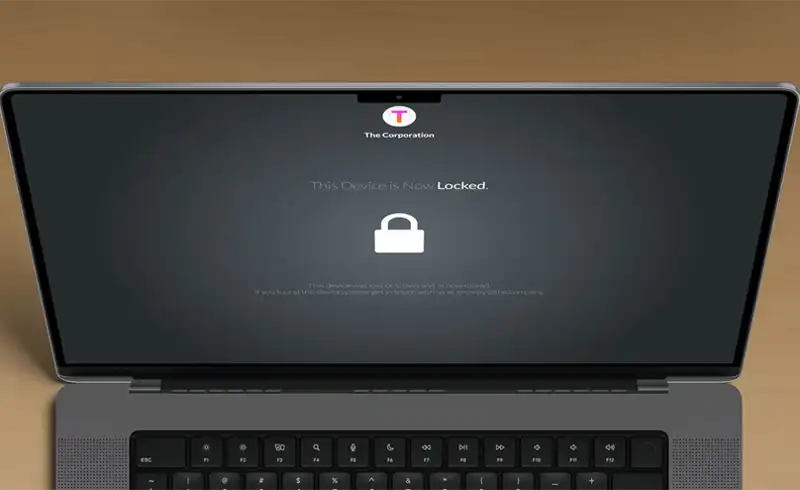
Starting with iOS 18 (fall 2024), Apple extended Activation Lock TO THE PART LEVEL. Concretely: if you install a display, battery, camera or USB-C port on your iPhone, and that part comes from a device marked as "Lost" / "Stolen" in iCloud, iOS DETECTS IT. The part works, but calibration (True Tone, Face ID, Battery Health) is permanently restricted.
Note: In iOS 26, the system tightened: now sensor controllers (Lidar, Ultra Wideband) have individual Activation Lock as well.
iCloud Activation Lock cross-device
iPhone, iPad, Apple Watch (watchOS 2+), MacBook + Mac mini + iMac (with T2 or Apple Silicon, macOS Catalina+) — all sit in the same Apple database. A MacBook stolen in Berlin today, dismantled next week in Shenzhen — three months later, when the display reaches a Bucharest shop and you try to install it on your Mac, iOS / macOS recognises it. Same for Apple Watch: the display, Digital Crown module, S-series chip — all individually registered.
Note: Apple combines hardware signatures + IMEI/serial number + internal database. Trade-off: you cannot "launder" the part.
GSMA IMEI Blacklist
Stolen phones are reported to GSMA (Global System for Mobile Communications) — the international database that blocks the IMEI on cellular networks. If the iPhone was reported, the IMEI stays in the global blacklist, regardless of country. This does NOT clear even after 10 years.
Note: Public verification: imei.info, checkcoverage.apple.com (only checks warranty + AppleCare status, not blacklist).
Parts and Service History in Settings
Settings → General → About → "Parts and Service History". Starting with iOS 18, every part in the iPhone has its status displayed: "Genuine Apple Part" / "Unknown Part" / "Used Apple Part". For "Used" parts, Apple checks whether they come from a device with active Activation Lock — in which case "Used Apple Part from device with Activation Lock" appears with permanent restrictions.
Note: The message is visible to ANY future user of your phone. Including the second-hand buyer.
The Genius Bar / AppleCare connection
If you take the device to an Apple Store for ANY issue (even unrelated to the stolen part), the technician scans the phone with AST 2 — Apple's diagnostic program. The system reads every component's signature. If a part marked "stolen" appears, the incident is logged in your Apple ID account.
Note: Documented consequences: AppleCare+ service refused, temporary iCloud lock until clarification, in serious cases — permanent AppleCare ban.
Part 4 — Real risks for you, the customer
Here is the important part: even if the phone "works" after installation, the risks you carry as the device owner fall into 4 distinct categories. None of them is theoretical.
⚠️ Technical risks
- Permanent "Unable to verify this is a genuine Apple part" or "Used Apple Part from another device" messages in Settings, visible forever on the device
- True Tone disabled permanently — display shows with incorrect colour temperature
- Battery Health blocked — you can no longer monitor battery degradation
- Face ID partially or completely non-functional — facial recognition becomes unusable on iPhone
- Camera without calibration — quality loss on photos (focus, exposure, Night Mode)
- On Mac: warnings on every boot if T2/Secure Enclave detects unpaired components
💸 Financial risks
- Manufacturer warranty = 0. Apple refuses any future AppleCare+ or in-warranty intervention
- Resale value drops 30-50%. Second-hand buyers now check Parts History before paying
- If the part fails in 2-3 months (frequent on dismantled parts), you pay again for replacement
- Phone insurance (Allianz, Groupama, AppleCare+ Theft and Loss) may refuse the claim if it detects non-genuine parts
⚖️ Legal risks
- Romanian Criminal Code, Art. 270 — Receiving Stolen Goods: "Receiving, acquiring, transforming or facilitating the use of an item known to come from a criminal offence" — penalty 3 months to 3 years prison
- If the part is part of an active police investigation (Find My tracking, raid on the seller shop), your device can be confiscated as evidence
- In cases of repeated or organised receiving (buyer + installer), the penalty can reach 5 years in prison
- The final trial: you, as the good-faith owner, must prove you did not know the origin — the burden of proof shifts fast if you bought from a shop known for suspiciously cheap parts
🚫 Apple ID / iCloud account risks
- Internal Apple account flag — visible to ANY Apple Store globally. Certain services (Trade-In, AppleCare, in-warranty repair) can be refused
- iCloud Activation Lock on your device can be temporarily suspended until Apple verifies (5-30 days)
- Apple ID can receive a permanent ban for fraud, if the same account repeatedly appears with devices containing parts from stolen items
- Loss of access to App Store / iTunes / Apple Music / iCloud purchases made on that account
Part 5 — Real cases: documented investigations
For those who think "it can't be that bad" — four documented cases from the last 12-18 months alone, across 4 different countries. These investigations are the tip of the iceberg.
"Legitimate" repair shop with 154 stolen iPhones in the basement
A British victim tracked their iPhone stolen at a carnival via Find My. The signal led to a commercial building in Cebu with a visible sign: "Cellphone Repair Shop". Police raided and found 154 high-end iPhones, some locked (in the process of being dismantled), others reprogrammed for resale. Two suspects arrested. The seemingly legitimate shop was actually the coordination point of an international network.
Source: iDropNews, January 2026
Dismantling gang with 43 stolen iPhones + 1 Samsung Fold
Delhi Police busted a gang specialised in "receiving and dismantling stolen high-end mobile phones". 44 smartphones recovered, of which 43 iPhones. The gang worked with local thieves in Delhi and Bombay, dismantled phones in a private workshop, exported the parts. Arrested members received 6 months to 3 years in prison.
Source: Delhi Police Crime Branch, 2025 report
World hub for dismantling stolen Western iPhones
Investigations by Times of London, BBC, AppleInsider documented the Feiyang Times building in Huaqiangbei, Shenzhen — the destination of thousands of iPhones stolen from London, Paris, NYC, Berlin. The 4th floor specialises in "phones from the West". Sam Amrani, a London entrepreneur, tracked his stolen iPhone 15 Pro straight to that address via Find My. Parts dismantled here flood the global "OEM parts" market.
Source: Times of London + AppleInsider, May 2025
Two Bergen County women — Apple Store theft ring
Two Bergen County women arrested after repeated thefts at Apple Stores. They lifted iPhones worth over $15,000. Subsequent investigation linked them to similar cases across NJ. The stolen phones were then sold to middlemen and eventually dismantled.
Source: Wayne Daily Voice, April 2026
Part 6 — How to check the parts in your device yourself
Four verification methods, all publicly accessible, none requiring advanced technical knowledge. You can do them in 5-15 minutes.
Settings → General → About → Parts and Service History
The most direct check. If you see "Genuine Apple Part" — the part is original and pairing was done correctly. If you see "Unknown Part", "Used Apple Part from device with Activation Lock" or "Unable to verify" — the part is EITHER non-original OR comes from a problematic device. Action: ask for explanations at the shop immediately.
checkcoverage.apple.com with IMEI/serial
Enter your phone's IMEI and check if it is "Eligible for Apple service". If a "Stolen device" or "Reported lost" flag appears — the phone (or a major part, e.g. logic board) comes from the stolen pipeline. Free official Apple public check.
GSMA IMEI Blacklist
On imei.info / imei24.com, enter the IMEI and check GSMA status. If "Blacklisted" appears — the phone was reported stolen in at least one of 50+ GSMA participating countries. Free check, takes 30 seconds.
AST 2 (Apple Service Toolkit) — AASP only
The official Apple diagnostic program, accessible only at Apple Authorized Service Providers and AASP. Reads the HARDWARE signature of every component — display, battery, camera, biometrics. Apple Store / Apcom / iStyle can run this test for free if you bring the phone. The most powerful publicly-available check.
Part 7 — How to spot a shop working with dubious parts
5 clear signals. If you tick 2 or more — leave immediately. No repair is worth the risk described in Part 3.
Extremely low price for a "genuine part"
iPhone 17 Pro display at 600 RON? Impossible. The real price for a genuine display (GPD or verified refurbished) is 1,100-1,250 RON. Below 800 RON = almost certainly a dubious part.
Refuses to issue a proper tax invoice
Handwritten receipt, VAT-less invoice, or "we'll work it out without paperwork for less". Clear signals the part cannot be documented in the fiscal system — either brought in unofficially, or from a source the seller wants to hide.
Does not run Repair Assistant after installation
Repair Assistant is the mandatory pairing step. If the shop "forgets" or says "it's not needed", check Settings → General → About immediately. Most likely "Unknown Part" will appear — sign that the part CANNOT be paired (i.e. does not come from GPD/IRP/Self Service).
Improvised location, no testing equipment
A legitimate shop has a microsoldering station, AST 2 or equivalent, bench multimeter, microscope. If you only see a desk with screwdrivers — it is likely a reseller of cheap parts, not a service shop.
Verbal warranty or "we don't do paperwork"
Warranty is given on a contract, with serial number, date, signature. Oral promises have no legal value. A serious shop gives you a service file and a warranty certificate of at least 12 months.
Part 8 — What we use at Radical Service (and what we refuse)
As a serious service, we have long since clarified our accepted sources. Below are the 4 rules we do not break — even for extra profit.
GPD parts (Genuine Parts Distributor) — for iPhone/iPad
Primary source: MobileSentrix EU and Mobileparts.shop, official Apple distributors. Parts arrive with Apple original chip, full pairing via Repair Assistant, proper tax invoice, manufacturer warranty + 24 months labour warranty.
100% certified refurbished parts — from our own device store
YES, we do use refurbished parts — but they come EXCLUSIVELY from our in-house refurbished and trade-in device store. Concretely: when a customer brings us a MacBook with a dead logic board from a power surge (or an iPhone with a defective camera from impact, or an iPad with a broken hinge), the remaining components are perfectly functional and have been INTERNALLY VERIFIED: serial check, IMEI GSMA status, Activation Lock status. These parts enter a documented internal pool — each with the original donor device file, purchase proof, and diagnostic report. ZERO parts from stolen or non-checkable devices.
Microsoldering on the original component
The best strategy: do not swap the part, repair what you have. For logic board, USB-C controller, PMIC, audio codec — we do targeted microsoldering. The phone keeps its original component, without the risk of a dubious part.
Our own refurbished device store — the transparent source
We run a separate store of refurbished iPhone, iPad, and MacBook devices — all with complete documented history: serial, initial purchase invoice, Apple coverage status, diagnostic report. That means we know exactly the history of every device we refurbish or harvest parts from. We DO NOT buy "no-paperwork" devices or "bulk import packages" — every unit has a verifiable purchase invoice.
Total refusal: Aliexpress, Telegram, "good offer" parts
We do not accept or buy parts from opaque channels. We do not negotiate with middlemen who cannot show a tax invoice, certificate of origin or GPD confirmation. For us, the risk of receiving-stolen-goods exposure under Romanian Criminal Code Art. 270 is intolerable — and morally, we don't want to be a link in a chain that leaves other people without their phones.
Frequently asked questions
How do I find out if the part in my iPhone is stolen?
I bought a second-hand iPhone. How do I check if the parts are clean?
What happens if I bring a phone with dubious parts to Apple?
Do I really risk criminal prosecution for installing a "cheap" part?
Why doesn't Apple act directly against these shops?
Can I remove the stolen part from my phone after discovering it?
Do Apple Watch and MacBook have the same risks?
Useful resources
- Genuine Parts Distributor — the legal alternative to stolen parts
- How to spot a badly repaired Mac — pre-purchase checklist
- Used iPhone verification — complete checklist
- Authorized vs independent Apple service — real differences
- Apple — official IMEI/serial check
- imei.info — free GSMA blacklist check
- Apple — Parts and Service History (official support)